




 by Barry
The Georgia Intangible Recording Tax: What Homebuyers Need to Know
If you’re buying a home in Georgia with a mortgage, there’s a state tax you may not have heard of: the intangible recording tax.
What It Is
Georgia’s intangible recording tax is a one-time state tax on long-term notes secured by real property. The rate is $1.50 per $500 of secured debt ($3.00 per $1,000). On a $320,000 mortgage, that’s $960. It’s collected at closing and paid to the county.
When It Applies
The tax applies to new notes secured by Georgia real property, which includes purchase mortgages and most refinances with loan terms exceeding sixty-two (62) months. However, if you are refinancing with the original lender, you are exempt from paying the tax on the portion of the new loan that represents the unpaid principal of the original note, provided the tax was previously paid. This can significantly reduce or eliminate the tax on the refinance.
How It Affects Your Closing Costs
The intangible tax typically adds $750 to $1,500 to closing costs, depending on loan amount. Because it’s based on loan amount rather than purchase price, buyers making a larger down payment pay less.
No Surprises at Closing
Review your Loan Estimate early and compare it to your Closing Disclosure before closing day. A good closing attorney will flag any discrepancies and make sure you understand every charge.
How Edwards Law Can Help
At Edwards Law, we review every closing cost so there are no surprises.
Ready to close? Call us at 404-341-9377 or email info@edwardslawatl.com.
 by Barry
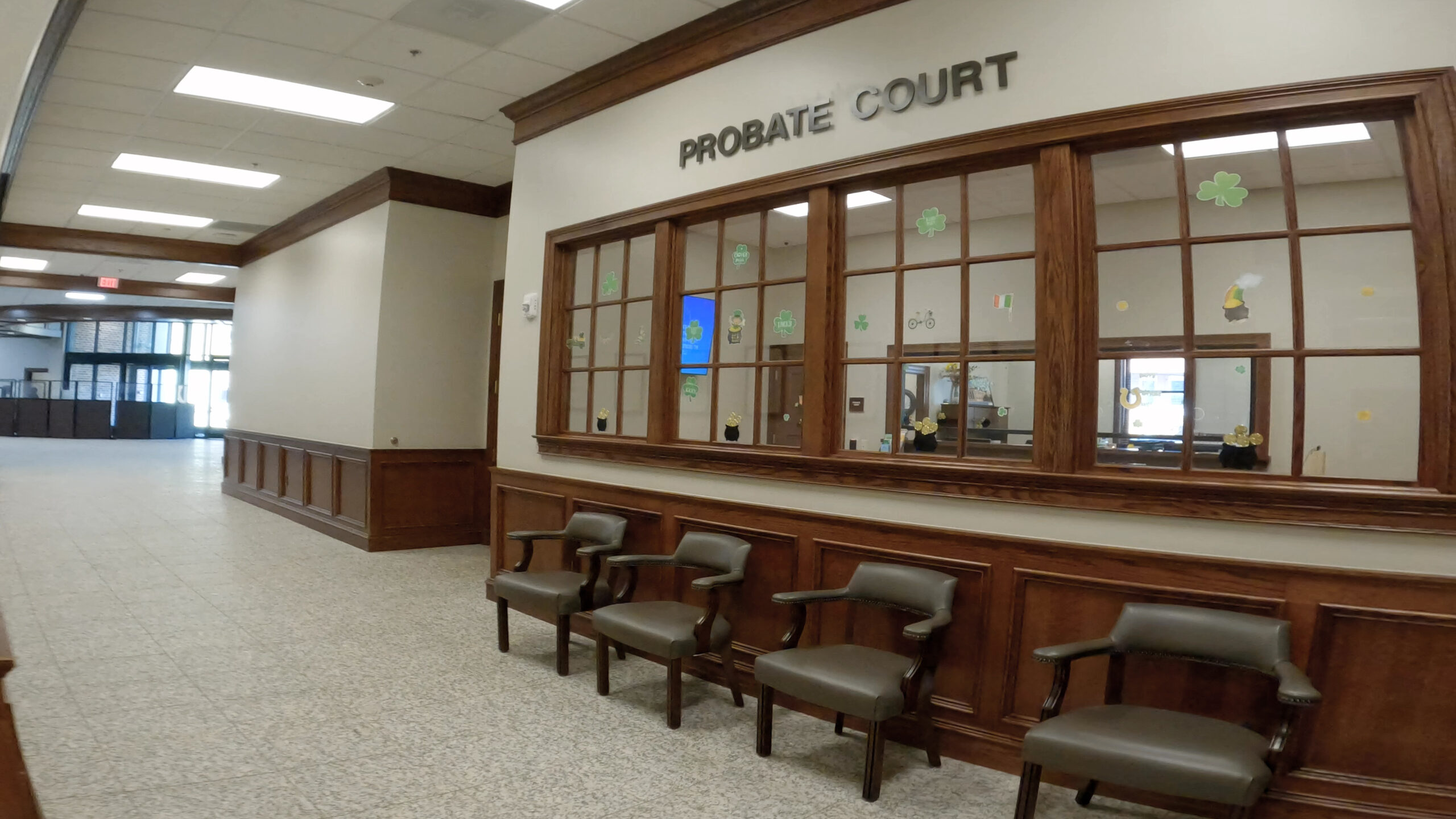
How Long Does Probate Take in Georgia?
When a loved one passes away, one of the first questions families ask is: “How long is this going to take?” Here’s a realistic framework.
The Basic Timeline
An uncontested probate in Georgia typically takes six months to a year. The process includes filing the petition, receiving letters testamentary, notifying creditors, paying debts and taxes, and distributing assets. The mandatory creditor notification period alone takes several months.
What Makes It Take Longer
Contested probate, where someone challenges the will or disputes the executor, can stretch to a year or more. Other delay factors include estates with real estate that needs to be sold, outstanding debts or tax issues, difficulty locating assets, and missing or incomplete documents.
What Probate Costs
Costs include court filing fees, executor compensation, attorney fees, and potential costs for appraisals or dispute resolution. For a straightforward estate, total costs typically range from a few thousand dollars to the low five figures.
Can You Avoid Probate Entirely?
Yes, in many cases. Assets in a revocable trust, accounts with beneficiary designations, jointly titled property, and property with transfer-on-death deeds all pass outside of probate. A well-structured estate plan can ensure most or all of your assets bypass the process.
That said, probate isn’t always the enemy. For simple estates, the Georgia process is manageable with the right attorney.
How Edwards Law Can Help
At Edwards Law, we handle probate administration and estate planning designed to minimize or avoid probate.
Ready to get started? Contact us today to schedule a consultation.
 by Barry
Wire Fraud in Real Estate: How to Protect Your Money Before Closing
Real estate wire fraud is one of the fastest-growing crimes in the country, targeting homebuyers at their most vulnerable moment…right before closing.
How the Scam Works
Criminals monitor transactions by hacking into email accounts. They watch the deal develop and send an email that looks like it’s from your closing attorney with “updated” wiring instructions directing your funds to a fraudulent account.
The emails are alarmingly convincing, because they will often include correct names, correct property addresses, and arrive at exactly the right moment. By the time anyone realizes the funds went to the wrong account, the money is usually gone.
How to Protect Yourself
The single most important rule is to never wire money based solely on emailed instructions. Always verify by calling your closing attorney’s office using a phone number you already have on file. At Edwards Law, we provide wiring instructions through secure channels and encourage every client to call and confirm.
Other precautions to consider are the use of strong passwords, enabling two-factor authentication, and to be suspicious of any last-minute changes to wiring details. Legitimate closing attorneys almost never change wiring instructions at the eleventh hour.
What to Do If You Suspect Fraud
Act immediately. Contact your bank and request a wire recall. File a complaint with the FBI’s Internet Crime Complaint Center (IC3) and notify your closing attorney and real estate agent. Every hour that passes reduces the likelihood of recovery.
Wire fraud isn’t a reason to be afraid of the closing process. However, it’s a reason to be informed and vigilant.
How Edwards Law Can Help
At Edwards Law, we take wire fraud prevention seriously. We use secure protocols for all wiring instructions.
Ready to close safely? Call us at 404-341-9377 or email info@edwardslawatl.com.
 by Barry
The Estate Planning Mistake That Bypasses Your Will Entirely
You could have the most carefully drafted will in Georgia, and it still won’t control some of your most valuable assets. That’s not a flaw in your plan. It’s how certain accounts are designed to work.
What Beneficiary Designations Override
Retirement accounts, life insurance policies, and accounts with payable-on-death or transfer-on-death designations all pass directly to whoever is named on the beneficiary form. They bypass your will entirely.
How This Goes Wrong
A common but unfortunate scenario is when someone passes away with a significant IRA still listing a first spouse as beneficiary, despite being remarried for over a decade. The will left everything to the current wife and children. But the IRA form controlled, and there was nothing the family could do.
Other common problems are a deceased parent still listed as beneficiary, “my estate” listed as beneficiary (which routes funds through probate), or a form that was never filled out. Georgia’s revocation-by-divorce statute covers wills and trusts, but federal ERISA governs most retirement accounts and doesn’t care about your divorce decree.
The 15-Minute Fix
Log into each account and verify your beneficiaries are current. Check both primary and contingent beneficiaries. If you’re not sure how your designations coordinate with your will or trust, that’s a conversation worth having with an estate planning attorney. A plan is only as strong as its weakest link.
How Edwards Law Can Help
At Edwards Law, we review beneficiary designations as part of every estate plan. If it’s been a while since you’ve checked yours, we can help.
Ready to get started? Contact us today to schedule a consultation.
 by Barry
Who Pays Closing Costs in Georgia? A Buyer’s and Seller’s Guide
One of the most common questions we hear from both buyers and sellers is: “What am I actually paying at closing?” The answer in Georgia follows a general pattern, but it’s also negotiable.
What Buyers Typically Pay
As a buyer, your closing costs generally include lender fees, the appraisal, prepaid interest, escrow deposits for taxes and insurance, title search and examination fees, owner’s title insurance, the Georgia intangible recording tax, and your share of the attorney’s fee.
In total, Georgia buyers should expect 2% to 4% of the purchase price in closing costs, in addition to the down payment. On a $400,000 home, that’s approximately $8,000 to $16,000.
What Sellers Typically Pay
Sellers generally cover the real estate commission (typically 5% to 6%), the Georgia transfer tax ($1.00 per $1,000 of the sale price), their share of the attorney’s fee, mortgage payoffs, and prorated property taxes.
Seller closing costs typically run 7% to 9% of the sale price when the commission is included. On a $400,000 sale, that’s roughly $28,000 to $36,000.
What’s Negotiable
Almost everything is negotiable. In a buyer’s market, sellers often agree to a “seller concession,” which is a contributing toward the buyer’s closing costs. Buyers can shop for certain services like title insurance and home inspections.
What isn’t negotiable: the Georgia intangible recording tax and the state transfer tax. These are statutory and apply regardless of what the parties agree to. However, the parties can certainly agree on who will be responsible for paying these taxes.
How Edwards Law Can Help
At Edwards Law, we review your closing costs line by line. No surprises at the closing table.
Ready to close with confidence? Call us at 404-341-9377 or email info@edwardslawatl.com.
 by Barry
Do I Need a Will or a Trust in Georgia?
It’s one of the first questions we get from new clients: “Should I get a will or a trust?” The honest answer is that it depends. However, not in a vague, unhelpful way. There are specific factors that point clearly in one direction or the other.
What a Will Does
A will is the foundation of most estate plans. It lets you name who inherits your assets, designate an executor, and name guardians for minor children. For many families with straightforward finances, a will-based plan is exactly the right tool.
The trade-off is that a will goes through probate. In Georgia, probate isn’t as burdensome as in some states, but it does mean your estate becomes public record and the process can take several months.
What a Trust Adds
A revocable trust does everything a will does but also transfers assets outside of probate. That matters most when you own real estate in multiple states, have significant assets you want to keep private, want more control over how and when beneficiaries receive their inheritance, or want to provide for a family member who needs ongoing financial support.
A trust also provides a seamless management structure if you become incapacitated. Your successor trustee steps in immediately and no court intervention required.
Which One Is Right for You?
For most professionals in their 30s to 50s, the decision comes down to complexity and goals. If your primary concerns are naming guardians, directing assets to your spouse and kids, and getting basic protections in place, a will-based plan is efficient and cost-effective. If you have multiple properties, blended families, or specific distribution goals, a trust gives you more flexibility.
One important note: regardless of which path you choose, you still need powers of attorney and healthcare directives. A will or trust handles what happens after you die. Powers of attorney and healthcare directives handle what happens if you’re alive but unable to make decisions. All of them are essential.
How Edwards Law Can Help
At Edwards Law, we walk you through both options and help you decide which fits your family’s situation.
Ready to get started? Contact us today to schedule a consultation.
 by Barry
What to Expect at Your Georgia Real Estate Closing
You’ve found the house, negotiated the price, and survived the inspection. Now comes closing day. If this is your first home purchase, the closing itself can feel like a mystery. Here’s what actually happens so you can walk in prepared.
Before Closing Day
Most of the work happens before you sit down at the table. Your lender finalizes the loan, the closing attorney reviews the title commitment and closing documents, and the title search confirms there are no outstanding liens. You’ll receive your Closing Disclosure at least three business days before closing. Review it carefully and compare it to the Loan Estimate you received when you applied.
You’ll also need to arrange your funds. In Georgia, you wire your closing funds to the closing attorney’s escrow account. The closing attorney or lender will provide wiring instructions and be sure to verify those instructions by phone before sending any money.
At the Closing Table
In Georgia, a licensed attorney must supervise real estate closings. Closings typically take 45-90 minutes. You’ll sign the loan documents, the settlement statement, and some additional forms. The closing attorney will walk you through each one. If something doesn’t look right, speak up before you sign.
After Closing
Once everything is signed and funds are disbursed, the deed is recorded with the county clerk’s office. You’ll receive a copy in the mail or via email a few days later. Your closing attorney handles paying off the seller’s existing mortgage, distributing funds to agents, and remitting taxes or fees.
Your job: change the locks, set up utilities, and store your deed and closing documents somewhere safe. You’ll need them for tax purposes and if you ever refinance or sell.
How Edwards Law Can Help
At Edwards Law, we make the closing process clear and stress-free. Whether you’re buying your first home or your fifth, we walk you through every document.
Ready to schedule your closing? Call us at 404-341-9377 or email info@edwardslawatl.com.
 by Barry
What Happens If You Die Without a Will in Georgia
Nobody likes thinking about it. But if you pass away without a will in Georgia, the state has a plan for your assets and there’s a good chance it doesn’t match what you would have chosen.
Georgia’s intestacy laws are a set of default rules that determine who inherits your property when you don’t leave instructions. They’re rigid, they’re impersonal, and they don’t account for the nuances of your family. Understanding what happens under these rules is often the push people need to finally put a plan in place.
Georgia’s Default Rules
If you’re married with children, your surviving spouse and children split your estate. Your spouse is guaranteed at least one-third, and the rest is divided equally among your children. That might sound reasonable, but consider what it means in practice. If you have three kids and a home that represents most of your wealth, your spouse could end up owning only a fraction of the house you shared. Selling the family home to divide the proceeds is a real possibility.
If you’re married without children, your spouse inherits everything. If you’re single with children, your children inherit equally. If you have no spouse and no children, the estate passes to your parents, then siblings, then more distant relatives. What the law doesn’t account for is stepchildren, unmarried partners, close friends, or charitable organizations you care about.
The Hidden Costs of No Plan
Beyond who gets what, dying without a will means your estate almost certainly goes through probate and, without a named executor, the court appoints an administrator. If you have minor children, a judge will choose their guardian. Family disagreements over guardianship can be painful, expensive, and entirely avoidable.
There are also practical headaches. Without powers of attorney, no one has immediate authority to manage your bank accounts, pay your bills, or deal with your mortgage.
The Fix Is Simpler Than You Think
A basic will-based estate plan addresses all of this. You decide who inherits your assets, who manages your affairs, and who raises your children. The process typically takes three to four weeks and costs far less than the legal fees your family would face navigating intestacy.
The bottom line: if you don’t have a will, Georgia has one for you. And it almost certainly isn’t the one you’d write yourself.
How Edwards Law Can Help
At Edwards Law, we help Atlanta families put a plan in place that reflects their actual wishes—not the state’s default rules.
Ready to get started? Contact us today to schedule a consultation.
 by Barry
Caught in the Middle: Estate Planning for the Sandwich Generation
If you’re in your late thirties, forties, or early fifties, there’s a good chance you’re being pulled in two directions at once. Your kids need your attention, your time, and your money. And increasingly, so do your aging parents. Financial planners call this the “sandwich generation” and if you’re living it, you already know the feeling.
The families who navigate this season best are the ones who plan through it, not around it. That starts with two conversations: one with your parents and one with yourself.
Helping Your Parents Get Their Plan in Order
The first step is often the hardest: asking your parents whether they have an estate plan. Many adult children assume their parents took care of this years ago. In my experience, that assumption is wrong more often than it’s right.
If your parents don’t have a plan, or if it hasn’t been reviewed in over a decade, the most critical documents to address are a will, a financial power of attorney, an advance directive for healthcare, and a HIPAA authorization. Together, these give you the legal authority to step in when your parents can’t manage things on their own. Without them, you may find yourself locked out of their financial accounts and medical records at precisely the moment you need access most.
It’s also worth having a candid conversation about the cost of long-term care. Medicare and standard health insurance cover far less than most people realize. If your parents carry long-term care insurance, know where the policy is and what it covers. If they don’t, talk about how those expenses will be managed. And if you end up contributing financially, pay healthcare providers directly rather than giving money to your parents. Under current tax law, direct payments to medical providers are not considered taxable gifts, regardless of the amount.
Your Own Plan Can’t Wait
This is where I see the biggest gap. Sandwich generation clients invest so much energy getting their parents’ affairs organized that they never address their own and the math is unforgiving. If something happens to you while you’re the one holding everything together, the people who depend on you most are the ones left scrambling.
At minimum, you need a will, financial powers of attorney, and an advance directive for health care. If you have minor children, naming guardians isn’t optional. If you don’t make that decision yourself, a probate court will make it for you. Beyond the documents, take an honest look at your financial position: life insurance, retirement contributions, and how much exposure your family carries if the primary earner is suddenly out of the picture.
For some families, a revocable trust is a stronger foundation than a will alone. A trust lets you provide for multiple generations (i.e., parents, spouse, and children) without routing everything through probate, and it lets you build in protections like staggered distributions for children or designated provisions for a parent who needs ongoing support.
Plan Now, Worry Less Later
Being caught in the middle is exhausting. But the families who come through it with the least stress are the ones who took action early. Start with your parents’ plan, then take care of your own, and revisit both regularly.
How Edwards Law Can Help
At Edwards Law, we work with Atlanta families navigating exactly this situation. Whether you need to get your parents’ documents in order, create your own estate plan, or develop a multigenerational strategy, we make the process clear, personal, and straightforward.
Ready to get started? Contact us today to schedule a consultation.
 by Barry
The Role of Surveys in Residential and Commercial Closings
Before purchasing residential or commercial property, a land survey ensures you fully understand what you’re buying.
Why Land Surveys Matter
- Confirm Boundary Lines – Prevents future disputes with neighbors.
- Identify Easements & Encroachments – Ensures no legal conflicts exist.
- Assess Zoning Compliance – Verifies property use aligns with local regulations.
Types of Surveys & When to Use Them
- Boundary Surveys – Ideal for homebuyers confirming property lines.
- ALTA/NSPS Surveys – Recommended for commercial real estate transactions.
- Topographic Surveys – Used for development projects requiring elevation details.
How to Avoid Survey-Related Delays
- Order a survey early to avoid last-minute surprises.
- Work with a trusted surveyor who specializes in Georgia real estate.
- Review the survey findings with a real estate attorney to address any red flags.
How Edwards Law Can Help
At Edwards Law, we review surveys, resolve disputes, and ensure a smooth closing process. Need expert guidance? Contact us today to discuss your property survey needs.